
12 June, 2025
How AI is Identifying At-Risk Students Before They Fall Behind
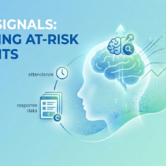
In traditional classrooms, teachers often realize a student is struggling only after test scores drop or assignments start missing. By that time, the student may already be far behind. Today, AI is changing that by identifying at-risk students early—sometimes weeks before the problem becomes visible.
In modern studio-based virtual classrooms, every learning interaction generates useful data. Students answer MCQs using clickers during live sessions, attendance is tracked automatically, and engagement patterns become visible. When combined, this information creates a powerful foundation for AI-driven insights.
Turning Classroom Data into Early Signals
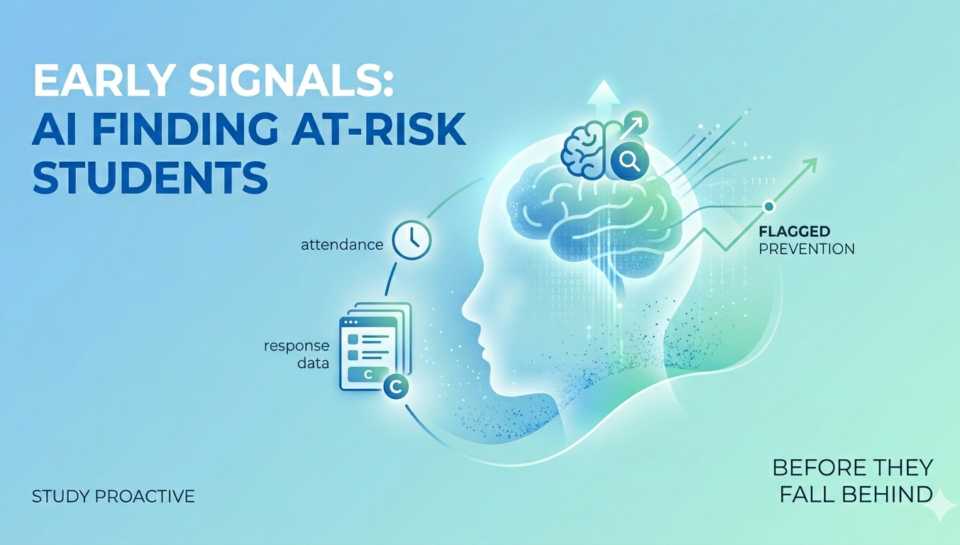
Each time students respond to a clicker question, the system captures valuable information: accuracy, response time, and consistency. Over multiple sessions, patterns begin to emerge. AI can detect when a student repeatedly struggles with certain concepts, answers randomly, or shows declining performance over time.
Attendance data adds another layer. Students who start missing classes or joining late often show early signs of disengagement. When AI combines attendance trends with quiz performance, it can flag potential risk much earlier than a human observer might notice.
Spotting Struggles Before They Become Failures
The real strength of AI lies in pattern recognition across large groups of students. For example, a student who answers only 40% of clicker questions correctly over several sessions, while also showing inconsistent attendance, may be automatically flagged as at risk.
Instead of waiting for midterm results, instructors can receive alerts in real time. This allows teachers to intervene early—reaching out to the student, offering extra support, or adjusting the teaching approach before the learning gap grows.
Helping Teachers Focus Where It Matters Most
AI doesn’t replace teachers; it amplifies their ability to support students. In large virtual classrooms, it’s nearly impossible for instructors to manually track every student’s performance pattern. AI systems act like an early-warning system, highlighting students who need attention.
This allows teachers to focus their time and energy where it will have the greatest impact.
From Reactive to Proactive Education
The biggest shift AI brings to education is moving from reactive support to proactive intervention. Instead of discovering problems after exams, educators can identify warning signs during everyday learning activities.
By combining clicker-based assessments, attendance tracking, and intelligent analytics, AI helps ensure that struggling students are seen, supported, and guided—before they fall behind.
Sit amet consect velit integer tincidunt scelerisque volutpat neque fermeny massa lacus. grapher based in York. Why the name “Egg Canvas Erica was inspired by her Korean childhood nickname, which means egg while “canvas” medium with wh art is created. “Egg Canvas therefore, is her life—creating beautiful things each.
Sit amet consect velit integer tincidunt scelerisque volutpat neque fermeny massa lacus. grapher based in York. Why the name “Egg Canvas Erica was inspired by her Korean childhood nickname, which means egg while “canvas” medium with wh art is created. “Egg Canvas therefore, is her life—creating beautiful things each day a blank canvas. Sit amet consect velit integer tincidunt scelerisque volutpat neque fermeny massa lacus. grapher based in York. Why the name “Egg Canvas Erica was inspired by her Korean childhood nickname.